


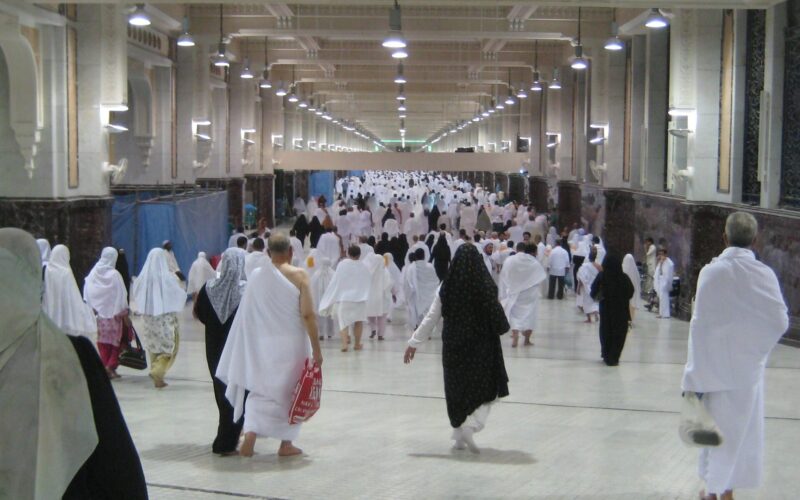
The Walk That Was Never Meant to Be Easy
There is a moment during Umrah or Hajj when your legs are tired, your body wants to stop, and your heart quietly asks,
“Why am I walking back and forth?”
That walk is Sa’i.
And once you understand it, you realize it was never meant to be easy. It was meant to remind you of a mother who ran between two hills, desperate, hopeful, exhausted, yet full of trust in Allah.
“Sa’i is not just walking. It is remembering that Allah responds to effort, not comfort.”
This guide will explain Sa’i slowly and simply, without heavy words or complicated explanations, just the way a human would explain it to another human standing beside them.
What Is Sa’i? (Simple Definition)
Let’s keep this very clear and very simple.
Definition of Sa’i
Sa’i means walking back and forth seven times between the hills of Safa and Marwa, following the path of Hajar (AS), the wife of Prophet Ibrahim (AS).
This walk is:
- A required part of Umrah
- A required part of Hajj
- Without Sa’i, Umrah or Hajj is not complete.
No shortcuts and no replacements.
Sa’i in One Look
| Term | Meaning |
| Sa’i | Walking between Safa and Marwa |
| Total rounds | 7 (Safa to Marwa = 1) |
| Required for | Umrah and Hajj |
| Purpose | Remembering trust, struggle, and hope |
The Story Behind Sa’i (Significance of Sa’i)
Before Sa’i became a ritual, it was a moment of survival.
Hajar (AS) was left in the desert with her baby, Prophet Ismail (AS). There was no water. No people. No help. She didn’t sit down and wait.
- She ran
- She searched
- She tried again
Seven times.
And when she had done all she could, then Allah sent Zamzam.
“Sa’i teaches us that effort comes before miracles.”
This is why Sa’i is not symbolic only. It is emotional, physical, and deeply human.
Where Sa’i Fits in Your Journey
If you’re performing Umrah, Sa’i comes after Tawaf. If you’re performing Hajj, Sa’i is part of the core rites. Many pilgrims first learn this clearly when preparing with a proper guide, especially helpful if it’s your first time. That’s why people often read a full walkthrough, such as “How to Perform Umrah,” when planning their journey, so they don’t feel lost once they arrive.
And when logistics are handled well, like flights, hotels, and timing, it becomes much easier to focus on worship. That’s why many pilgrims prefer planning Umrah or Hajj through Amax, so the spiritual side doesn’t get buried under stress.
What Does Safa Mean?
Safa is one of the two small hills inside Masjid al-Haram. The word Safa comes from a root that means:
- purity
- clarity
- sincerity
Safa is where Sa’i begins.
When you stand at Safa, you’re standing where a mother once stood, looking across the desert, searching for water for her child. That alone should slow your steps.
“Safa reminds us that faith often begins in uncertainty.”
What Does Marwa Mean?
Marwa is the second hill. The word Marwa is associated with strength and firmness, like stone.
Marwa is where Sa’i ends.
It represents:
- endurance
- patience
- not giving up, even when nothing seems to change
Between Safa and Marwa, Hajar (AS) ran seven times, refusing to sit still in despair.
Safa and Marwa at a Glance
| Place | Meaning | Role in Sa’i |
| Safa | Purity, beginning | Starting point |
| Marwa | Strength, firmness | Ending point |
How to Perform Sa’i (Step by Step, Without Stress)
After Tawaf, most people feel a mix of emotions. Some feel relieved. Some feel tired. Some feel unsure about what comes next.
What comes next is Sa’i. And honestly, Sa’i is not complicated. It just needs calm understanding.
“Sa’i is not about how fast you walk. It’s about why you keep walking.”
Let’s take it step by step, slowly.
Step 1: Start at Safa
Sa’i always begins at Safa. When you reach Safa:
- Face the Kaaba
- Raise your hands if you like
- Praise Allah
- Make any dua that comes from your heart
There is no pressure to memorize long duas. Many people worry about saying the “right” words. But the truth is, Allah already knows what you’re feeling.
This is a common Safa and Marwa dua that many people say, but it’s optional:
“Allahumma inni as’aluka min fadlik.”
(O Allah, I ask you for Your bounty.)
Say it or don’t. Speak in your own language if that feels more real.
Step 2: Walk from Safa to Marwa
Now you begin walking toward Marwa. This walk counts as one round. The path is clearly marked, air-conditioned, and smooth. You don’t need to rush. Just walk naturally.
For men, there is a short section marked with green lights where it is Sunnah to walk a bit faster. Women walk normally throughout.
“Sa’i teaches you balance and effort without panic.”
Step 3: Reach Marwa and Pause
When you reach Marwa:
- Face the Kaaba again
- Praise Allah
- Make dua
This pause matters. It reminds you that even in struggle, it’s okay to stop and breathe.
Step 4: Walk Back to Safa
Walking back from Marwa to Safa counts as your second round. You continue this until you complete seven rounds total. Remember this simple rule:
- Safa → Marwa = 1
- Marwa → Safa = 2
- Ending point after 7 rounds = Marwa
Sa’i Rounds Made Easy
| From | To | Round Count |
| Safa | Marwa | 1 |
| Marwa | Safa | 2 |
| Safa | Marwa | 3 |
| Marwa | Safa | 4 |
| Safa | Marwa | 5 |
| Marwa | Safa | 6 |
| Safa | Marwa | 7 |
Distance Between Safa and Marwa (People Always Ask This)
The distance between Safa and Marwa is about 450 meters one way. So in total, during Sa’i, you walk a little over 3 kilometers.
That’s why:
- Feeling tired is normal
- Taking short pauses is okay
- Walking slowly does not reduce reward
- Allah does not measure worship by exhaustion.
What Should You Say During Sa’i?
This is where people overthink the most. There are no fixed duas for walking between Safa and Marwa.
You can:
- Make personal duas
- Ask Allah for help, forgiveness, guidance
- Stay quiet and reflect
- Repeat simple phrases like SubhanAllah or Alhamdulillah
Many people remember loved ones here. Some cry softly. Some smile. Some feel nothing at all. All of it is accepted.
“Sa’i listens even when you don’t speak.”
A Very Human Tip
If you lose count:
- Don’t panic
- Go with the number you are more sure about
- Continue calmly
- Almost everyone loses count at least once.
Sa’i During Umrah and Hajj
Sa’i is required for both Umrah and Hajj. If you’re doing Umrah, Sa’i comes right after Tawaf, and this is explained clearly in this guide, How to Perform Umrah, which many first-time pilgrims find helpful before traveling.
During Hajj, Sa’i is also a core part of the rites, and understanding where it fits becomes much easier when you’ve already seen a full step-by-step Hajj guide before arriving.
That’s why many pilgrims choose to plan their journey through Amax, so the sequence feels clear and calm instead of confusing.
Why Sa’i Matters So Much (Its Real Significance)
At first, Sa’i can feel repetitive. Walking back and forth. Same path. Same view. Same tired legs. And then it hits you. That repetition is the lesson.
Sa’i reminds us that life doesn’t always change quickly. Sometimes we do the same thing again and again, hoping for relief, answers, or help. And that doesn’t mean Allah isn’t listening.
“Sa’i teaches patience when nothing seems to change.”
Allah could have sent water to Hajar (AS) the first time she ran. Or the second. But he waited until she had done everything she could.
That’s the heart of Sa’i.
What Makes Sa’i Valid (Requisites of Sa’i)
People often worry they might miss something important. Let’s make this very clear and very simple.
The basic requisites of Sa’i are:
- You must have performed Tawaf before Sa’i
- Sa’i must be between Safa and Marwa
- You must complete seven rounds
- Sa’i must start at Safa and end at Marwa
Common Mistakes People Make (And It’s Okay)
Many people make small mistakes during Sa’i. Almost everyone does. Some common ones:
- Starting from Marwa instead of Safa
- Losing count of rounds
- Rushing and feeling exhausted
- Stressing too much about duas
None of these means your worship is wasted.
“Allah rewards effort, not perfection.”
If you’re unsure, ask a guide or pause and reset.
A Gentle Reminder for First-Time Pilgrims
By the sixth or seventh round, your legs may feel heavy. Your pace slows. Your mind quiets down. Something shifts.
You’re no longer thinking about the distance between Safa and Marwa. You’re thinking about your life. Your struggles. Your hopes. And when you finally reach Marwa for the last time, there’s a soft sense of relief.
“Sa’i ends in silence, not noise.”
If this is your first Umrah or Hajj, it’s okay to feel unsure. Reading through a clear guide, How to Perform Umrah before your journey, can help a lot, especially when it explains where Sa’i fits in the whole process.
How Sa’i Changes the Way You Think
After Sa’i is done, many people don’t talk right away. Not because they are tired but because something inside feels quiet. You’ve just walked the same path again and again. No shortcuts. No applause. Just effort. And somehow, that stays with you. Sa’i has a way of teaching you things without saying anything.
It teaches you that:
- Trying again is not failure
- Repeating effort is not a weakness
- Silence can still be worship
“Sa’i reminds us that Allah sees every step, even when no one else does.”
Some people realize this immediately. Some realize it days later. Some feel it only when they face hardship back home.
But the lesson settles in slowly.
A Small Moment to Remember
When you finish your seventh round and reach Marwa for the last time, pause. Just for a few seconds.
- Look around.
- Breathe.
- Let your heart catch up with your body.
You just honored the struggle of a mother. You just walked a path chosen by Allah.
You just completed an act that connects effort with mercy.
“Not every act of worship feels powerful. Some feel quiet and stay with you longer.”
Simple Questions People Ask About Sa’i
Do I have to be in wudu for Sa’i?
It is recommended, but Sa’i is still valid even if wudu breaks. Tawaf requires wudu; Sa’i does not strictly depend on it.
Can I sit or take breaks during Sa’i?
Yes. You can sit, rest, drink water, and continue. Sa’i is not a test of strength.
Can I talk while performing Sa’i?
Yes. But many people naturally grow quieter as they walk.
What if I forget a round?
If you’re unsure, go with the number you are more confident about and continue calmly.
Final Thoughts on Sa’i
Sa’i is not dramatic. It is not loud. It does not demand attention. It simply asks you to keep going.
And maybe that’s why Allah chose it. Because life often feels like Safa and Marwa, walking, hoping, trusting, repeating.
“Sa’i teaches us that Allah responds to effort, even when the answer comes later.”
References
Saudi Ministry of Hajj and Umrah – Pilgrim Guidelines
Islamic Relief – Understanding Sa’i and Its Significance
IslamQA – Rules and Conditions of Sa’i
Al-Madinah Islamic Research Center – Hajj and Umrah Rituals