
The Moment That Feels Different
Have you ever felt a moment where everything changes, not because the place is new, but because you are stepping into it differently? That’s what Ihram feels like.
It’s not just clothing. It’s a state of mind. When you put on Ihram for Umrah or Hajj, you are telling yourself and Allah that for this journey, nothing else matters.
“Ihram is the quiet promise in your heart: I am here for You, and only You.”
Some people get nervous, some get excited, some just stand there for a few minutes, feeling a little unsure. And that’s completely normal. That’s part of the experience. If you have no idea about what Ihram is, what it means, or what the rules for wearing it are, then this blog is for you.
What Does The Ihram Mean?
Honestly? The definition of ihram is a mix of things.
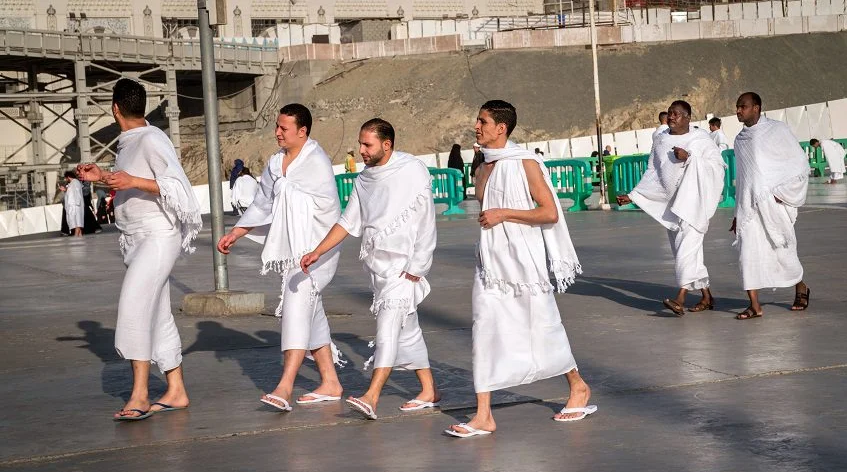
Yes, it’s clothing, the white sheets for men, the modest dress for women. But it’s also a state of mind. A promise. A pause from everyday life. When you are in Ihram, you are stepping into a sacred zone, where your thoughts, words, and actions are meant to focus on Allah.
In short:
Ihram = clothing + mindset + rules
Quick Look at Ihram
| Components | What it means |
| Clothing | Men: two white sheets. Women: modest plain attire |
| Rules | No cutting hair, no perfume, no arguing, no harming living things |
| Mindset | Pure intention, calm heart, focus on worship |
How to Wear Ihram: A Simple, Calm Guide
Putting on the Ihram for the first time can feel strange. Two white sheets for men, modest clothing for women, it looks simple, but it’s also a new experience. Don’t worry. Everyone feels a bit awkward at first. The important thing is your heart and intention.
“Ihram is not about looking perfect. It’s about being present and sincere.”
Step 1: Clean Yourself
Before you put on Ihram:
- Take a shower or wash up
- Trim nails, remove unwanted hair
- Don’t use perfume
These small things help your mind feel ready. It’s like saying, “I’m leaving everyday life behind for this sacred journey.”
Step 2: Make Your Intention
Now, quietly in your heart, say:
“I intend to enter Ihram for Umrah (or Hajj) for the sake of Allah.”
That’s all. You don’t need long words or Arabic you don’t know. Your intention is enough.
Step 3: Put on the Clothing
For Men:
- One sheet around your waist (izar)
- One sheet over your shoulder (rida)
- Shoes must leave your ankles uncovered
- No stitched clothing above the waist
For Women:
- Wear modest, simple clothing covering your body
- White or plain colors are common
- Face can be uncovered, or lightly covered if preferred
Don’t stress if the sheets slip or feel odd at first, as everyone adjusts as they walk.
Step 4: You Are in Ihram
Once your clothes are on and your intention is made, you are officially in Ihram.
From this moment:
- Your words, actions, and thoughts should focus on worship
- Certain things become restricted, but they are meant to help your heart stay mindful
Step 5: Simple Rules to Remember
Here are the main things to keep in mind
| Rule | What it Means |
| Don’t cut hair or nails | Wait until Tawaf or leaving Ihram. |
| Don’t use perfume | No scented lotions or sprays |
| Don’t argue or fight. | Keep calm, even in crowds. |
| Don’t harm animals | Be kind to all creatures |
“Rules are not limits, but they are reminders to keep your heart focused.”
Step 6: Gentle Tips
- Walk slowly, breathe, and stay calm
- Don’t worry about the crowd or small mistakes
- Focus on your connection with Allah, not on looking perfect
- Guides and services like Amax make it easier, especially if it’s your first trip
If you want, there’s a great step-by-step Umrah guide that also explains Ihram and Tawaf, making the whole process less stressful.
Step 7: Common First-Time Mistakes
- Forgetting to make an intention
- Wearing the sheets incorrectly
- Using perfume accidentally
- Getting frustrated in crowds
None of these ruins Ihram. What matters is trying and being sincere.
Why It Matters
Wearing the Ihram does something to you. Even if you don’t feel it immediately, it reminds you that, for this journey:
- Everyone is equal: Rich, poor, young, old, tall, short. No one stands out, except through sincerity.
- Every action counts: Even small words, even small thoughts.
- You belong to Allah, for these few days: Your normal worries, distractions, and ego stay outside.
When I first wore Ihram, I remember thinking, “This is weirdly freeing. I have nothing to prove. I exist here, and that’s enough.”
And that’s what Ihram is: freedom in surrender.
Who Should Wear Ihram?
Anyone going for Umrah or Hajj. Simple.
Men wrap themselves in two white sheets. Women wear modest clothing, usually white or plain, that fully covers the body.
For many pilgrims, the most confusing part is entering Ihram at the right time, especially when traveling by plane. There are specific Miqat points where Ihram must be declared, and these are often crossed while flying.
Because of this, many pilgrims look into their travel details early, including flight routes and arrival timing. Some travelers come across general information on Umrah or Hajj planning from providers like Amax, which often explains when the Miqat is approached during flights. Having this clarity beforehand helps reduce uncertainty and allows pilgrims to focus on their intention rather than the logistics of the journey.
And yes, when you’re getting ready for Umrah, there’s a full guide that shows you step by step how to perform it, which can be really helpful.
How It Feels to Be in Ihram
No one really tells you this part, but wearing Ihram feels strange at first. Not bad. Just different. You look at yourself and think, “Is this really it?” Two white sheets, or simple, modest clothes, nothing fancy, nothing to hide behind. You suddenly feel exposed quietly. Not embarrassed, just aware.
And that’s the point.
Ihram removes the layers we usually carry around. The clothes we choose, the image we try to keep, the small things we worry about every day. For a moment, all of that disappears.
“Ihram doesn’t change how you look to others. It changes how you see yourself.”
Some people feel calm right away. Some feel emotional for no clear reason. Some feel nothing at first, and that’s okay, too.
Ihram works slowly, and it settles in gently.
Learning to Stay in Ihram
Once you are in Ihram, you start noticing your behavior more than usual. You become aware of your words, your reactions, even your thoughts. You might catch yourself getting annoyed in a crowd and then stopping.
You might feel tired and choose patience instead of frustration. That’s Ihram working on you. Here are a few very real, very human reminders that help:
- Crowds will test your patience. People walk slowly. Some stop suddenly. Some push without meaning to. Try not to take it personally. Everyone is trying their best.
- You don’t need to correct others. Focus on yourself. Your worship is between you and Allah.
- Silence is also worship. You don’t have to keep talking or making dua every second. Sometimes just walking quietly is enough.
“In Ihram, even holding back anger becomes an act of worship.”
Common Things People Worry About (And Shouldn’t)
Many pilgrims worry they are doing something wrong. This happens a lot, especially the first time.
Let’s make a few things very clear.
If:
- Your Ihram slips a little
- You forget a rule and remember it later.
- You feel tired, overwhelmed, or confused.
It does not mean your worship is ruined.
Allah is not waiting for you to make a mistake. He is watching your effort.
Some people get anxious about small details and forget the bigger picture. Ihram is about intention and awareness, not fear.
Staying Comfortable While in Ihram
Comfort matters more than people admit. When your body is uncomfortable, it’s harder to focus spiritually.
A few simple things help a lot:
- Walk slowly and take breaks when needed
- Drink water regularly
- Adjust your clothing calmly without embarrassment.
- Sit down if you feel dizzy or tired.
Islam never asks you to suffer for no reason.
“Allah loves ease, not hardship.”
This is why many people prefer traveling with experienced services like Amax. When logistics are handled properly, your mind is free to focus on worship rather than stress, whether it’s for Umrah or Hajj.
A Small, Honest Moment
Many pilgrims remember one quiet moment in Ihram.
Maybe it’s standing still after making an intention. Maybe it’s walking toward the Haram for the first time. Maybe it’s realizing everyone around you looks the same.
That moment stays with you.
Not because it was dramatic, but because it was real.
“In Ihram, you don’t feel important. And somehow, that feels peaceful.”
Before Exiting the State of Ihram
When your Umrah or Hajj steps are complete, and you finally leave Ihram, there is often a strange feeling. Relief, yes, but also something else.
You realize how light you felt. How focused your heart was. How simple life became for a short while. And you quietly wish to carry a little of that feeling back home.
Frequently Asked Questions
1. What if I make a mistake while in Ihram?
Small mistakes can happen, especially for first-time pilgrims. If it’s unintentional, it usually doesn’t affect your Umrah or Hajj. Sincerity matters most.
2. Can I talk and do normal activities in Ihram?
Yes. You can talk, eat, drink, and rest normally. Ihram is about being mindful, not silent or inactive.
3. How long does Ihram last?
For Umrah, it lasts until Sa’i is completed and hair is trimmed or shaved. For Hajj, it depends on the stage of the pilgrimage.
Final Thought on Ihram
Ihram is not about rules alone. It’s not about perfect clothing. It’s not about doing everything exactly right. It’s about showing up, sincerely. Walking slowly. Thinking carefully. Being gentle with yourself and others.
“Ihram reminds you that you don’t need much to stand before Allah.”
References
- Saudi Ministry of Hajj and Umrah – Ihram Guidelines and Pilgrim Instructions
https://www.haj.gov.sa
- Islamic Relief – Understanding Ihram and Its Spiritual Significance
https://www.islamicrelief.org
- IslamQA – Rules, Conditions, and Common Questions About Ihram
https://islamqa.info